The distinction matters because the wrong choice can add avoidable touches, storage, exam delays, or inland linehaul costs. If you ship through the Ports of Long Beach and Los Angeles, this is less about terminology and more about matching the move to customs status, destination, and handling needs.
What is container drayage?
Container drayage is the short-haul truck move that takes an ocean container from the Port of Long Beach or a rail ramp onto a chassis and into the next leg of transport.
In practice, drayage is the bridge between marine or rail terminals and the rest of your inland network. FMCSA treats containers and chassis as intermodal equipment, and an Intermodal Equipment Provider can make that equipment available for interchange with motor carriers. That matters because the drayage carrier is not just hauling freight, it is also managing terminal appointments, chassis interchange, container pickup, and often the empty return.
A common misconception is that drayage means the entire over-the-road shipment. It usually does not. Drayage is normally the first short move that gets the container off the port or rail facility and into delivery, storage, transload, or another intermodal step.
What is transloading?
Transloading is the warehouse step where cargo is unloaded from an ocean container and reloaded into a domestic trailer or domestic intermodal container.
That cargo-handling step can be simple or highly operational. The Port of Los Angeles describes transloading as transferring freight into larger domestic intermodal containers for inland rail movement, especially on long eastbound moves, and it can also include value-added activities like packaging and tagging. In retail, distribution, and manufacturing, transloading often means converting a floor-loaded import box into palletized domestic freight that is easier to store, sort, and deliver.
Another misconception is that transloading is only for damaged freight or special projects. In many U.S. import programs, it is planned from the start because domestic equipment, warehouse handling, and inland rail or truck capacity can outperform direct container delivery on cost or speed.
How does container drayage differ from transloading?
Container drayage moves the container itself, while transloading moves the cargo out of that container and into new equipment.
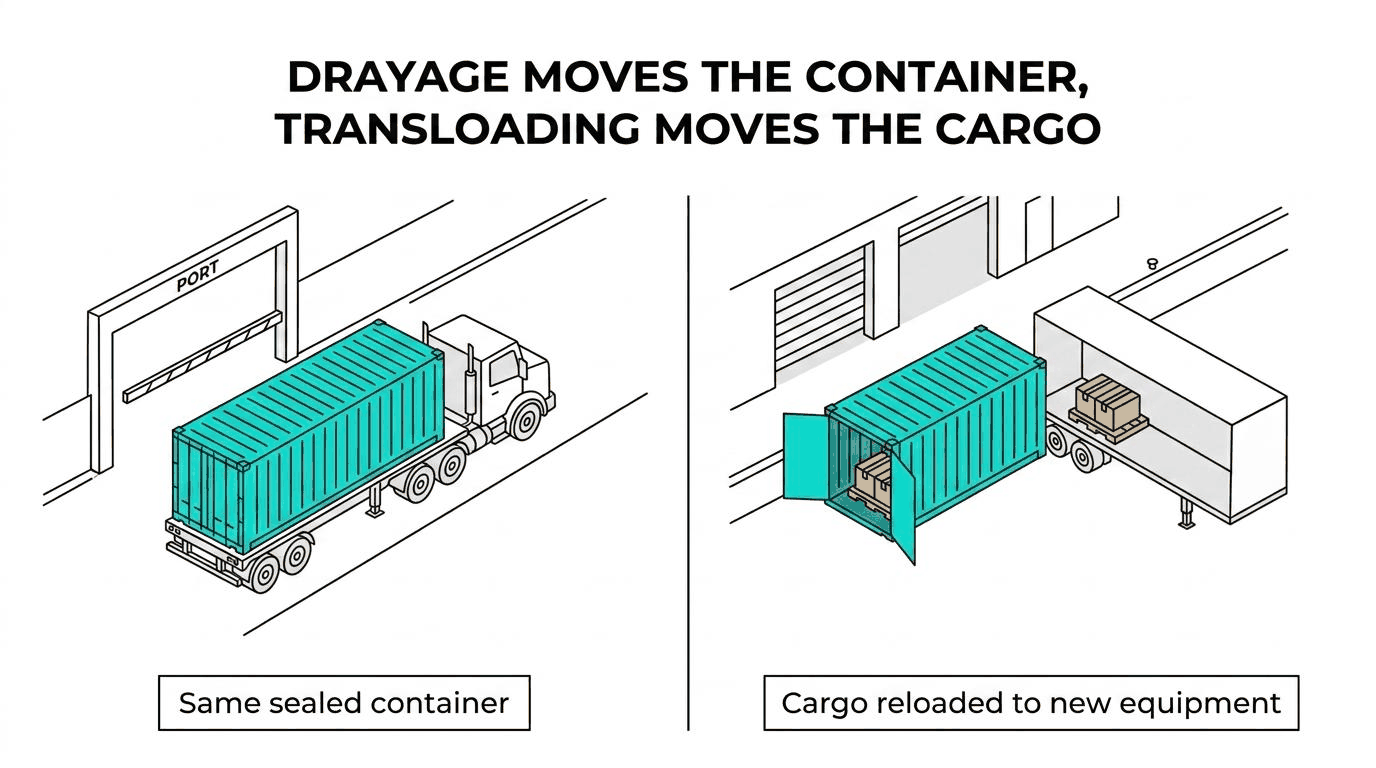
That difference affects almost every operational choice. Drayage is equipment-centric: terminal release, chassis, appointment, seal integrity, and return timing matter most. Transloading is cargo-centric: unloading labor, count verification, pallet configuration, reloading method, and downstream trailer utilization matter most.
If the same sealed container can go from terminal to consignee, drayage-only is usually cleaner because it reduces touches and lowers handling risk. If the freight needs to be sorted, palletized, split across orders, or moved inland in a 53-foot trailer or domestic rail container, transloading often creates better network efficiency. The trade-off is simple: drayage reduces handling, transloading increases flexibility.
What container drayage providers are worth considering for Southern California freight?
The best container drayage providers in Southern California are the ones that can control pickup timing, communicate clearly, and connect port moves to the inland plan without adding avoidable handoffs.
Before choosing any provider, look at four practical filters: proximity to the port complex, authority and insurance, communication quality, and whether the carrier can support the next move after drayage. A shipper that needs only port pickup may choose differently from a shipper that needs drayage plus dry van delivery across multiple states.
- Givanni Transport: An owner-operator option based in Long Beach for port drayage, dry van freight, and follow-on moves across the Lower 48 with direct communication.
- Asset-based local drayage fleets: Best when you need higher daily port volume, appointment coverage, and broader chassis coordination.
- Warehouse-linked transload carriers: Best when your container is likely going straight to a nearby warehouse for unload, sort, palletizing, or reload.
- Intermodal marketing companies and 3PLs: Best when the move may convert from ocean container to domestic rail or multi-state managed transportation.
The key is fit, not label. A large fleet can be the right answer for high-volume import programs, while an owner-operated carrier can be the right answer when accountability, speed of response, and direct visibility matter more than scale.
When should a shipper choose drayage only instead of transloading?
Shippers should choose drayage only when the ocean container can deliver directly to the consignee or a nearby facility without cargo rework.
This usually fits four situations: the delivery point can receive the ocean container, the cargo does not need palletizing or sorting, the customs status is straightforward, and the inland distance does not justify unpacking into domestic equipment. It is also a strong option when product is fragile, irregular, or prone to handling damage, because every unload and reload adds risk.
The common pricing mistake is to compare only the drayage rate with the transload fee. The better test is total landed cost. If direct container delivery prevents warehouse labor, reduces cargo touches, and keeps the timeline short, drayage-only can win even when the linehaul looks less optimized on paper.
How does the container drayage process work step by step?
Container drayage follows a predictable sequence: release, appointment, chassis interchange, terminal pickup, delivery, and empty return.
Step 1 is document and status validation. The shipper, broker, or carrier confirms container number, availability, customs status, release, terminal appointment rules, and delivery target. If any one of those is missing, the driver may lose the pickup window.
Step 2 is equipment execution. The carrier secures or interchanges a chassis, arrives at the terminal, picks up the container, verifies seal and basic condition, and departs to the delivery point or transload warehouse. If the terminal or steamship line has special return rules, that has to be planned before the move starts.
Step 3 is closeout. After delivery or unload, the empty container is returned to the correct location within the required timing. Pro tip: empty return planning is not a back-office detail. If the return yard changes after pickup, the economics of the move can change fast.
For the delivery leg itself, Xpressbudet notes that clear proof-of-delivery procedures reduce disputes and keep closeout predictable when freight is time-sensitive.
How does transloading work step by step?
Transloading starts with drayage to a warehouse, then shifts into unload, verification, reconfiguration, reload, and dispatch.
Step 1 is inbound control. The container is drayed to the warehouse, the seal is checked, and the unloading plan is matched to the outbound mode. That could be a 53-foot dry van, a domestic intermodal container, or split shipments going to multiple destinations.
Step 2 is cargo handling. The freight is unloaded, counted, inspected, and often palletized, tagged, relabeled, or sorted by purchase order or destination. This is where the CTU Code becomes relevant as a recognized global guide for safe packing, securing, receiving, and unpacking cargo transport units across the intermodal chain.
Step 3 is outbound build. The warehouse reloads the freight into domestic equipment, secures it for highway or rail movement, and tenders it to the next carrier. A useful correction here: transloading is not automatically slower. If it unlocks faster inland capacity or reduces downstream delivery complexity, it can shorten total transit time.
How should you choose between drayage and transloading step by step?
The best choice comes from a simple sequence: map the freight, test the destination, check customs constraints, then compare full cost.
Step 1 is freight profile. Ask whether the cargo is floor-loaded, palletized, fragile, high-cube, or mixed by SKU. If the consignee needs sorted pallets or order splits, transloading moves up the list.
Step 2 is network fit. Ask where the freight is actually going. If the destination is local to Southern California, drayage-only often makes sense. If the freight is moving deep inland and domestic equipment offers better cube or rail access, transloading becomes more attractive.
Step 3 is compliance and timing. If the container is in bond, under exam, or not yet released, the legal path may decide the operational path. Step 4 is total landed cost. Count labor, handling risk, chassis time, warehouse fees, appointment exposure, and inland linehaul together, not one by one.
How do customs, in-bond moves, and container exams change the plan?
CBP can control where the container goes next, so customs status can override a shipper’s preferred routing.
CBP’s Immediate Transportation Entry lets imported goods move under bond from the arrival port to another U.S. port for final entry and clearance without duty payment. The in-bond application includes commodity details, container information, seals, and destination, and the carrier must electronically report arrival within two business days. If your move depends on in-bond handling, your drayage and transload plan has to match that filing.
Container exams matter too. CBP has stated that it can require drayage of containers from the port of arrival to a designated Container Examination Station for inspection, and liability can shift depending on which party transfers the merchandise to the CES. Pro tip: do not assume a planned transload can begin just because the container is physically available at the port. Release status and exam routing are separate issues.
What documents and data points should shippers have ready for container drayage or transloading?
Shippers should have the operational data ready before dispatch, because missing details create avoidable port failures and warehouse confusion.
A good handoff packet helps both the drayage carrier and the transload facility. It also reduces rekeying errors when appointments, customs status, and inland delivery instructions are changing quickly.
- Container and seal details: container number, seal number, size, and status
- Pickup control data: terminal, release or pickup number, last free day, and appointment requirements
- Commodity details: description, weight, piece count, hazmat status if any, and packaging type
- Customs and bond status: entry status, in-bond information, exam holds, and destination instructions
- Cargo handling instructions: palletizing, sorting, labeling, value-added activities, and outbound mode
- Final delivery data: consignee address, appointment, contact, and dock constraints
One data point many shippers overlook is the container stuffing location. CBP requires that element in certain Import Security Filing contexts for transit cargo, which shows that how and where the box was loaded can matter later in the chain.
How do cost, dwell, chassis, and inland capacity affect the decision?
The lowest rate rarely wins, because port timing, equipment access, and inland capacity can change the total cost more than the base move.
Drayage-only usually means fewer touches and lower warehouse spend. The downside is that the ocean container may be a poor fit for long inland truck moves, consignee unload timing, or freight density. Transloading adds labor and handling, but it can improve cube utilization, unlock domestic 53-foot capacity, and support rail strategies on longer inland lanes. The Port of Los Angeles has tied transloading to larger domestic containers and inland rail patterns on eastbound freight, which is a useful benchmark for when the model works.
If chassis availability is tight, or if terminal appointments are unstable, drayage moves can become more expensive even when the quoted rate looked attractive. If warehouse labor is constrained, transloading can become the bottleneck instead. The strongest operating plans treat both options as tools and decide based on the actual container, the actual destination, and the actual release status on that day.
How can shippers reduce cargo risk during drayage and transloading?
Shippers reduce risk by controlling handoffs, documenting condition, and matching cargo securement to the next mode.
Risk management starts before the driver arrives. Confirm who has custody at each stage, who verifies the seal, who records visible condition, and who is responsible if the container is diverted to a Container Examination Station or transload warehouse. If those answers are vague, claims handling gets harder.
Cargo handling standards matter more during transloading because the freight is being physically touched. The CTU Code is a strong reference point for packing, securing, receiving, and unpacking cargo transport units across sea and land moves. A practical tip is to specify outbound packaging and securement before unload begins. If the warehouse has to guess how the freight should ride in a domestic trailer, damage risk rises and rework follows.